Conditions
What is Hallux Valgus?
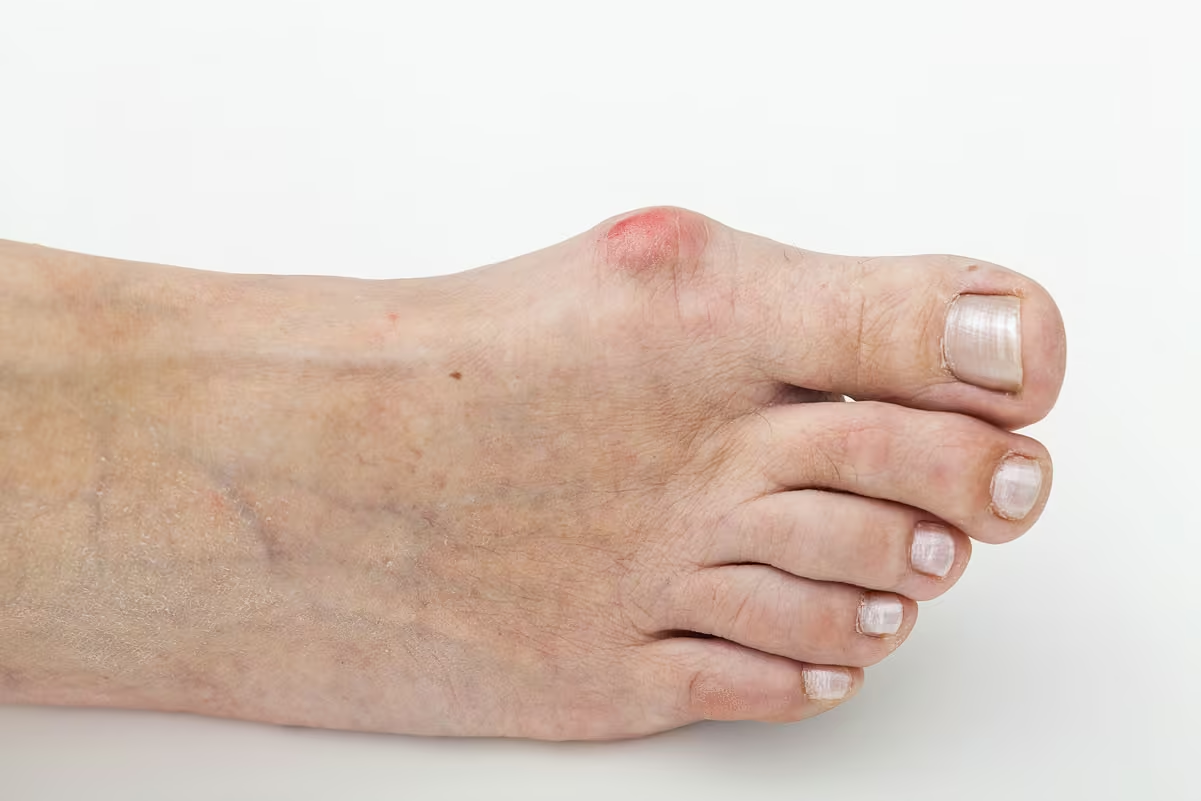
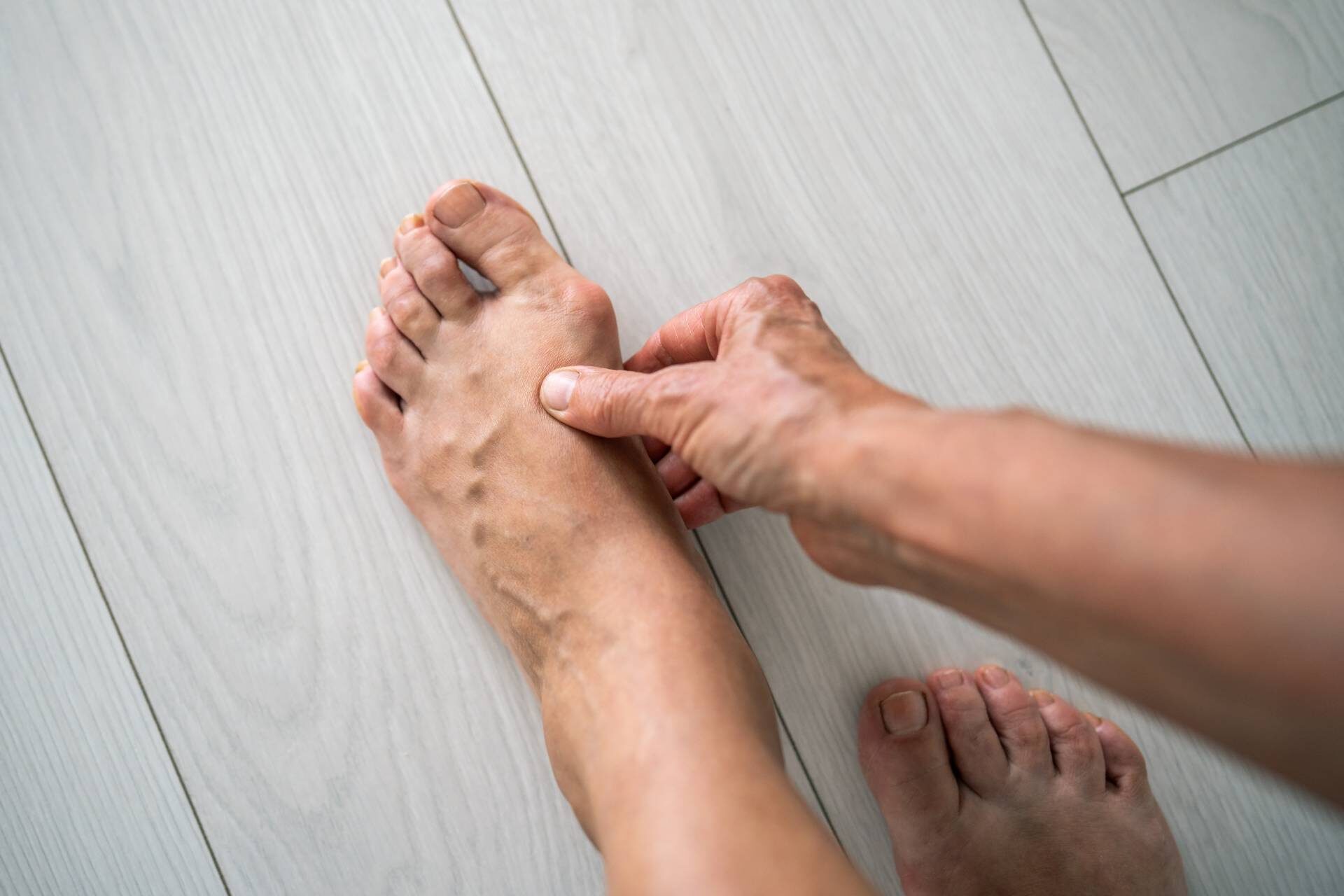
It is a deformity of the big toe joint, which pushes it towards smaller toes causing pain, inflammation, swelling, and stiffness around the joint, especially with pressure from tight shoes.
What is Hallux Valgus and what causes it?
- Arthritis can be a risk factor.
- Family history of Hallux Valgus.
- Wearing tight shoes can contribute to the problem.
What can I do about it?
- Wear good fitting shoes.
- Avoid high heels.
- Wear a pad over the bunion.
- See a podiatrist.
What help can I get for this?
- Podiatrist may advise on appropriate footwear, padding, night splints.
- Podiatrist may consider prescribing orthotics.
- Foot and ankle surgeon may advise on surgery if the joint is too painful.
When will it get better?
The symptoms may well settle, especially if you are careful with shoes, but the deformity is likely to progress.Surgery is the only effective way of correcting the deformity (but it may still reoccur in the future).
Conditions
Simple preventative measures can be taken as a means to avoid both injuries. Prior to any movement, taking a few minutes to stretch out the tendon is a great way to stimulate the tissue. Calf raises, squats, leg curls, leg extensions, leg raises, lunges, and leg presses are all suggested ways to help strengthen the lower legs and promote Achilles tendon health.
Many problems arise among athletes and people who overexert themselves while exercising or who do not properly warm up before beginning an activity. Proper, comfortable shoes that fit correctly can also decrease tendon injuries. Some professionals also suggest that when exercising, you should make sure that the floor you are on is cushioned or has a mat, as this will relieve pressure on the heels. As always, a healthy diet will also increase tendon health.
It is very important to seek out a podiatrist if you believe you have an injury in the Achilles region, because further damage could result in severe complications that would make being mobile difficult, if not impossible.